
From The Post and Courier:
Severe spending restraint is a fact of life for governments at all levels across the land. But if sweeping budget reductions gut our already-insufficient investment in public infrastructure, Americans could end up paying a terrible price for an illusory bargain.
Pennsylvania Gov. Ed Rendell brought that urgent message to Charleston last week. Co-chair of Building America's Future, a bipartisan coalition of elected officials sounding the infrastructure alarm, he said in a visit to this newspaper: "We are in serious danger of our infrastructure collapsing. The threat to public safety is enormous."
An Associated Press story in Wednesday's Post and Courier offered a grim example of that menace. It reported on the struggles of a Goose Creek husband and his children to cope with the March loss of their wife and mother. She was killed when a chunk of asphalt flew through her windshield on I-20 near Heflin, Ala.
Gov. Rendell, formerly the mayor of Philadelphia, joined Charleston Mayor Joe Riley in decrying our decaying infrastructure's detrimental effects on not just safety but quality-of-life issues, including ever-growing traffic congestion and carbon emissions. The second-term governor offered this bottom line: "We've forgotten how businesses grow."
Gov. Rendell served as chairman of the Democratic National Committee from 1999-2001. Now he's teamed up with two prominent Republicans -- outgoing California Gov. Arnold Schwarzenegger and New York City Mayor Michael Bloomberg -- who are his BAF co-chairs.
They correctly cite the growing gap between the infrastructure improvements being made by other economic powers and the U.S. -- and the rising risks that without significant, timely upgrades in our roads, airports and port facilities, we will keep losing critical ground in the global marketplace.
Public infrastructure spending in the U.S. has dropped to less than 2.5 percent of gross domestic product. Some of our key international competitors commit three times as much of their GDPs to this vital purpose.
From a BAF fact sheet: "One-third of America's major roads are in poor or mediocre condition, and 45 percent of major urban highways are congested."
And a trend of particular interest in this port city: "By 2020, every major U.S. container port is projected to at least double the volume of cargo it was designed to handle. Some East Coast ports will triple in volume, and some West Coast ports will quadruple."
America's infrastructure needs aren't confined to transportation and commerce. For example, our overburdened and aging electrical grid increasingly suffers costly brownouts.
On the brighter side, Gov. Rendell pointed out that even in this year's election, with budget-cutting zeal running high, 71 percent of infrastructure initiatives passed, proving that "the American people get it."
He identified "Job One" as "fix it first" -- make necessary repairs to current infrastructure. However, he also stressed that we must move forward on high-speed rail.
Gov. Rendell hailed the concept of a National Infrastructure Bank to generate funds from a variety of sources (tolls, capital bonding, gas-tax increases, leveraging private capital) -- and would allocate money based on merit. He also called for more private-sector investment, while correctly warning that significant public investment will be necessary for many projects.
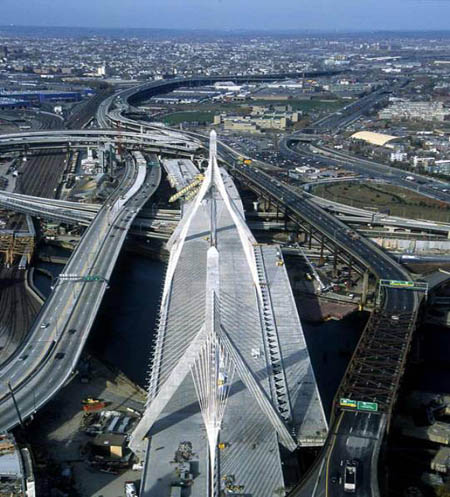
Certainly our own S.C. State Infrastructure Bank, created in 1997, has helped deliver such investment -- and played a crucial role in raising the state share of funding for the $632 million Arthur Ravenel Jr. Bridge over the Cooper River.
Of course, with government balance sheets looking as grim as they now do, any pitch to boost public spending has become a tough sell.
But as Gov. Rendell aptly put it: "We can't stop investing in ourselves."
And we can't adequately maintain -- and modernize -- our infrastructure without finding ways to get that necessary job done.
http://www.postandcourier.com/news/2010/dec/23/the-infrastructure-alarm/




No comments:
Post a Comment