
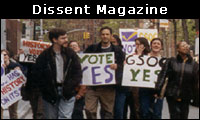
Writing in the Spring 2007 edition of Dissent Magazine, Benjamin Ross asks the question, can the Democratic populist moment last ? http://www.dissentmagazine.org/article/?article=%20763
Last November, Democrats won middle and working class voting precincts by railing against "free trade" policies and excessive compensation packages for corporate CEO's. The Democrats recapture of Congress in the 2006 was in large part due to the return of voters with socially conservative-economically populist views. So far the Democratic Congress has shown populist leanings by passing a minimum wage increase and legislation that would lower the interest rate on student loans. Still, there are concerns that a business as usual approach is creeping in.
The newly reached agreement between Congressional Democratic leaders and the Bush White House on free trade treaties with Columbia, Panama, Peru and South Carolina has drawn skepticism from some populist Democrats in Congress. Some Democrats strongly doubt that the Bush Administration will enforce the environmental and labor standards touted by Democratic leaders including House Speaker Nancy Pelosi. Representative Mary Kaptur D-OH told the Associated Press that "the strongest voices for workers and the environment were not included in the negotiations and were not informed of the deal."
If the "free trade" compromise is any indication of where the new Congress is going, populist voters may conclude as in the Clinton years of the 90's that neither party is looking out for the interests of working Americans. In fact, the mix of free trade advocacy and social liberalism during the Clinton-Gore policies seemed to express a less than subtle contempt for the socially traditionalist labor voters that had loyally supported the Democratic Party since FDR. Many"New Democrats" envisioned a socially liberal "yuppie" party filled with educated, high-tech workers and Republican Bob Dole even mentioned upscale "Soccer Moms" in the 1996 Presidential debate.
Now that many of the tech jobs have moved overseas and the middle class is feeling much greater economic anxiety, it seems that populism has a new lease on life. The problem is that many of our politicians in both parties are beholden to Wall Street and the "K' Street lobbyists rather than to the public.As Ross points out, working class populist-social traditionalist voters never really disappeared but for the past twenty years both parties have been concentrating on winning over upscale voters with conservative views on economic matters and liberal views on social issues.
Such voters are seen as more important as they are more affluent and far more likely to contribute to campaigns that working and lower middle class social traditionalist-populist types. The power of elitist social liberals within the Democratic Party has been increased by the proliferation of single issue groups favoring causes like abortion and gay-lesbian rights. Ross also notes that in 2006, Republicans were able to resist in the Democratic trend in key House races in upscale and socially liberal "hedge fund" areas like Greenwich,Connecticut and the suburbs of cities like Chicago and Seattle.
Ross writes:
"The economically liberal and socially conservative have always been a large segment of the electorate. A 1999 Pew Research Center survey categorized one-third of all Democrats in a “socially conservative” group. Together with the “partisan poor” who had similarly traditional attitudes on religious and social issues, they made up the majority of all Democratic voters. Nearly a third of Republicans fell into a “populist” group that had decidedly anti-business views. Yet in the Congress of that year there were few Democrats, and certainly no Republicans, with such combinations of opinions. What caused the severe underrepresentation of populist voters in Congress, and what changed to enable populists to arrive with such sudden force?"
"The answer to this question lies in the enduring inequalities of class. Numbers do not translate automatically into political power. For one thing, the media are dominated by elite opinion, in its divisions over social issues and in its agreements about economics. On issues such as trade and the minimum wage, where elite and mass diverge most sharply, the views of the great majority of the American people are presented as the fringe of the debate. The fundamental human right of workers to organize earns hardly a mention."
"An even more important factor is the financing of political campaigns. The cost of campaigns has skyrocketed since the 1970s; a serious challenge for a House seat costs upward of a million dollars, and Senate races often exceed ten million. Economic progressives have found it hard to keep pace with the rising price of politics. Unions, with their membership stagnant, were unable to compete in the financial arms race; the Catholic and Jewish ethnic networks that helped pay for New Deal-era campaigns moved to the right on economics as memories of immigrant generations faded; and the generation of progressive political donors formed by the civil rights movement and the Vietnam War had less inclination to Democratic partisanship than the generation formed by the New Deal and the Second World War."
"By the 1990s, Democratic campaigns relied heavily on single-issue contributors motivated by noneconomic issues—feminism, the environment, gay rights, gun control, and others. The party also drew its funds from relatively friendly business interests in such sectors as entertainment, finance, and computer software. Between these two groups there was considerable overlap in views, and frequently in membership, with the business people inclined toward social liberalism and the social liberals often sharing the globalist views of the businesses. An across-the-board progressive like Paul Wellstone could still mobilize social liberals to finance his campaigns. But candidates of the stripe of Jim Webb and Heath Shuler were largely shut out of the process."
"In the waning years of the George W. Bush era, the politics of campaign finance has changed entirely. Money floods into Democratic coffers driven by outrage at the Iraq War, the erosion of civil liberties, and the influence of a religious right that has become part of the Republican Party machine. Although most of the individual contributors probably hold more or less the same opinions about questions of public policy as the single-issue donors of the 1990s, they are motivated by a profoundly different political outlook. Democrats have become thoroughly partisan. Their overriding objective is to end Republican control of the government. To that end, any Democrat with a chance of winning will be supported—and in most of the places where seats can be gained, that means populists."
"The last few years have been a time for putting party before issues. Iowa Caucus-goers of 2004 rejected Howard Dean in the hope of defeating Bush, and the bloggers of 2006 promoted the insurgent primary candidacies of social conservatives Webb and Tester. Among donors, similarly, partisanship trumps economics. The paychecks of thousand-dollar campaign contributors will surely not be enlarged by a higher minimum wage, yet they cheer Nancy Pelosi’s determination to put this vote-winning issue at the top of her agenda. Democratic candidates, assured of the funds needed to run a campaign, are set free to represent voters rather than money."
"It is this rapid change in the temper of the political class, and of its campaign-contributing subclass specifically, that fueled the sudden populist surge of 2006. When this partisan temper cools, as it will if Democrats recapture the presidency in 2008, the populist tide will inevitably recede with it. That is not because populist voters will be less numerous, but because the conditions will be less favorable for translating their numbers into political power."
"The tide will recede, but it will not likely fall back to its previous ebb. Political motion develops its own momentum, and especially so when it carries a previously excluded group into the halls of power. Once included in the political debate, populist views will be hard to shut out. Democratic contributors educated by the 2006 election returns will remain open to supporting populist candidates. The loss of economic security in an era of globalization will continue to draw voters’ attention to social inequalities. And, we may hope, Democrats will seize this populist moment to enact structural reforms in campaign finance and union rights, so that the votes of the many carry a little more weight against the campaign contributions of the few. " http://www.dissentmagazine.org/
I agree. We need a populist Democratic Party rather than two parties representing Wall Street. While I favor a moderate to conservative course on social and national security issues, Democrats must represent the interests of workers and consumers rather than the powerful corporate interests that have have ruled our country for the past 25 years.
Last November, Democrats won middle and working class voting precincts by railing against "free trade" policies and excessive compensation packages for corporate CEO's. The Democrats recapture of Congress in the 2006 was in large part due to the return of voters with socially conservative-economically populist views. So far the Democratic Congress has shown populist leanings by passing a minimum wage increase and legislation that would lower the interest rate on student loans. Still, there are concerns that a business as usual approach is creeping in.
The newly reached agreement between Congressional Democratic leaders and the Bush White House on free trade treaties with Columbia, Panama, Peru and South Carolina has drawn skepticism from some populist Democrats in Congress. Some Democrats strongly doubt that the Bush Administration will enforce the environmental and labor standards touted by Democratic leaders including House Speaker Nancy Pelosi. Representative Mary Kaptur D-OH told the Associated Press that "the strongest voices for workers and the environment were not included in the negotiations and were not informed of the deal."
If the "free trade" compromise is any indication of where the new Congress is going, populist voters may conclude as in the Clinton years of the 90's that neither party is looking out for the interests of working Americans. In fact, the mix of free trade advocacy and social liberalism during the Clinton-Gore policies seemed to express a less than subtle contempt for the socially traditionalist labor voters that had loyally supported the Democratic Party since FDR. Many"New Democrats" envisioned a socially liberal "yuppie" party filled with educated, high-tech workers and Republican Bob Dole even mentioned upscale "Soccer Moms" in the 1996 Presidential debate.
Now that many of the tech jobs have moved overseas and the middle class is feeling much greater economic anxiety, it seems that populism has a new lease on life. The problem is that many of our politicians in both parties are beholden to Wall Street and the "K' Street lobbyists rather than to the public.As Ross points out, working class populist-social traditionalist voters never really disappeared but for the past twenty years both parties have been concentrating on winning over upscale voters with conservative views on economic matters and liberal views on social issues.
Such voters are seen as more important as they are more affluent and far more likely to contribute to campaigns that working and lower middle class social traditionalist-populist types. The power of elitist social liberals within the Democratic Party has been increased by the proliferation of single issue groups favoring causes like abortion and gay-lesbian rights. Ross also notes that in 2006, Republicans were able to resist in the Democratic trend in key House races in upscale and socially liberal "hedge fund" areas like Greenwich,Connecticut and the suburbs of cities like Chicago and Seattle.
Ross writes:
"The economically liberal and socially conservative have always been a large segment of the electorate. A 1999 Pew Research Center survey categorized one-third of all Democrats in a “socially conservative” group. Together with the “partisan poor” who had similarly traditional attitudes on religious and social issues, they made up the majority of all Democratic voters. Nearly a third of Republicans fell into a “populist” group that had decidedly anti-business views. Yet in the Congress of that year there were few Democrats, and certainly no Republicans, with such combinations of opinions. What caused the severe underrepresentation of populist voters in Congress, and what changed to enable populists to arrive with such sudden force?"
"The answer to this question lies in the enduring inequalities of class. Numbers do not translate automatically into political power. For one thing, the media are dominated by elite opinion, in its divisions over social issues and in its agreements about economics. On issues such as trade and the minimum wage, where elite and mass diverge most sharply, the views of the great majority of the American people are presented as the fringe of the debate. The fundamental human right of workers to organize earns hardly a mention."
"An even more important factor is the financing of political campaigns. The cost of campaigns has skyrocketed since the 1970s; a serious challenge for a House seat costs upward of a million dollars, and Senate races often exceed ten million. Economic progressives have found it hard to keep pace with the rising price of politics. Unions, with their membership stagnant, were unable to compete in the financial arms race; the Catholic and Jewish ethnic networks that helped pay for New Deal-era campaigns moved to the right on economics as memories of immigrant generations faded; and the generation of progressive political donors formed by the civil rights movement and the Vietnam War had less inclination to Democratic partisanship than the generation formed by the New Deal and the Second World War."
"By the 1990s, Democratic campaigns relied heavily on single-issue contributors motivated by noneconomic issues—feminism, the environment, gay rights, gun control, and others. The party also drew its funds from relatively friendly business interests in such sectors as entertainment, finance, and computer software. Between these two groups there was considerable overlap in views, and frequently in membership, with the business people inclined toward social liberalism and the social liberals often sharing the globalist views of the businesses. An across-the-board progressive like Paul Wellstone could still mobilize social liberals to finance his campaigns. But candidates of the stripe of Jim Webb and Heath Shuler were largely shut out of the process."
"In the waning years of the George W. Bush era, the politics of campaign finance has changed entirely. Money floods into Democratic coffers driven by outrage at the Iraq War, the erosion of civil liberties, and the influence of a religious right that has become part of the Republican Party machine. Although most of the individual contributors probably hold more or less the same opinions about questions of public policy as the single-issue donors of the 1990s, they are motivated by a profoundly different political outlook. Democrats have become thoroughly partisan. Their overriding objective is to end Republican control of the government. To that end, any Democrat with a chance of winning will be supported—and in most of the places where seats can be gained, that means populists."
"The last few years have been a time for putting party before issues. Iowa Caucus-goers of 2004 rejected Howard Dean in the hope of defeating Bush, and the bloggers of 2006 promoted the insurgent primary candidacies of social conservatives Webb and Tester. Among donors, similarly, partisanship trumps economics. The paychecks of thousand-dollar campaign contributors will surely not be enlarged by a higher minimum wage, yet they cheer Nancy Pelosi’s determination to put this vote-winning issue at the top of her agenda. Democratic candidates, assured of the funds needed to run a campaign, are set free to represent voters rather than money."
"It is this rapid change in the temper of the political class, and of its campaign-contributing subclass specifically, that fueled the sudden populist surge of 2006. When this partisan temper cools, as it will if Democrats recapture the presidency in 2008, the populist tide will inevitably recede with it. That is not because populist voters will be less numerous, but because the conditions will be less favorable for translating their numbers into political power."
"The tide will recede, but it will not likely fall back to its previous ebb. Political motion develops its own momentum, and especially so when it carries a previously excluded group into the halls of power. Once included in the political debate, populist views will be hard to shut out. Democratic contributors educated by the 2006 election returns will remain open to supporting populist candidates. The loss of economic security in an era of globalization will continue to draw voters’ attention to social inequalities. And, we may hope, Democrats will seize this populist moment to enact structural reforms in campaign finance and union rights, so that the votes of the many carry a little more weight against the campaign contributions of the few. " http://www.dissentmagazine.org/
I agree. We need a populist Democratic Party rather than two parties representing Wall Street. While I favor a moderate to conservative course on social and national security issues, Democrats must represent the interests of workers and consumers rather than the powerful corporate interests that have have ruled our country for the past 25 years.





No comments:
Post a Comment