
 JFK at the Oak Ridge Research Reactor
 Rod Adams, publisher of Atomic Insights http://www.atomicinsights.com/ observes a growing interest in nuclear energy within Democratic Party circles. Democrats are often stereotyped as anti-nuclear but surveys have shown that rank and file Democratic voters support expansion of nuclear power by a 2 to 1 margin (Rasmussen Reports, August 2005). As Adams points out, great Democrats like Al Gore, Sr. and Henry "Scoop" Jackson were among the original proponents of building nuclear plants to meet our nation's energy needs.
Adams writes in the informative Atomic Insights blog:
For the past 30 years, there has been a perception, sometimes reinforced by actions and statements, that the US Democratic Party is reflexively anti-nuclear. At the same time, it has been the perception, sometimes reinforced with words, if not action, that the Republican Party at least wants to "keep the nuclear option open".
When involved in discussions with people in the industry or related academic or government fields, I have tried to persuade people that these perceptions are over simplified and not terribly useful to the continued development of safe, clean, abundant nuclear energy.I remind people that some of the major political support for the technology in its earliest days came from strong Democrats like Senator Al Gore Sr., Senator Henry M. Jackson and L. Mendel Rivers. I also point out that it was President Ford, not President Carter who initially signed the Executive Order that forced the shutdown of the nuclear fuel recycling industry just when it was getting to a point where it could start operating profitably.
http://tinyurl.com/267zuh
Another article also suggests increasing Democratic backing for expanded nuclear power as a means of reducing greenhouse gas emissions which contribute to global warming.
James Hoare
Environment News
Publication Date: February 1, 2007
The Heartland Institute
http://www.heartland.org/
Nuclear power offers a safe and economical way to meet anticipated growth in American energy demand, according to an October 2006 report by the Progressive Policy Institute, a policy arm of the Democratic Leadership Council (DLC).The report, "A Progressive Energy Platform," praises nuclear power as a key weapon against asserted global climate change and air quality concerns."
Nuclear power holds great potential to be an integral part of a diversified energy portfolio for America," the report states. "It produces no greenhouse gas emissions, so it can help clean up the air and combat climate change."
New Technological Advances
Key to the DLC's support for nuclear power are technological advances that substantially improve on an already impressive safety and environmental record."
New plant designs promise to produce power more safely and economically than first-generation facilities," the report explains. "For example, the Nuclear Regulatory Commission (NRC) has certified three new designs that would use significantly fewer pumps, pipes, valves, and cables than first-generation facilities."
That will reduce the plants' complexity, making them easier to inspect and maintain," the report continues. "From a safety perspective, the new plants rely on natural forces such as gravity, natural circulation, and condensation, assuring safe shutdown even in the event of an accident."
The report also notes further advances in nuclear plant design."In addition to these three new approved designs," the report adds, "at least four other designs may soon win NRC approval. Among these is the promising modular, 'pebble bed' reactor design.
As the name suggests, these smaller plants would use hundreds of thousands of uranium pebbles rather than large cores to generate power. As researchers at MIT recently concluded, these pebbles burn more completely than their traditional counterparts."
Deregulation Needed
We certainly welcome the Progressive Policy Institute support," Nuclear Energy Institute spokesman Steve Kerekes said. "It reflects the fact that there is considerable bipartisan support for nuclear energy and there has been support for a long time." We anticipate this report will have a positive impact among Democrats and among citizens as a whole," Kerekes added. "Support for clean, safe, and economical nuclear power continues to build all across America."
http://tinyurl.com/2bcxxn
* JIM WEBB EMERGES AS A PRESIDENTIAL POSSIBLITY
Before watching his electrifying response to the Bush State of the Union address, I had no idea that Jim Webb was in the ranks of great communicators like JFK and Ronald Reagan. With a mix of populism and patriotism, Webb is the one of the few political leaders who have any grasp of how to restore America's sense of unity and purpose.
Maybe a Presidential candidacy this soon in his political career seems unrealistic, but Jim Webb impresses me far more than any of the current Democratic (or Republican) Presidential prospects for 2008. Webb could attract support from across the political spectrum. There is no other political figure that I am aware of getting praise from The Nation http://tinyurl.com/38qmc9 on the left and The American Conservative http://tinyurl.com/2sg5wt on the right.
Even most students of politics have probably forgotten that Ronald Reagan first sought the Republican Presidential nomination in 1968 - only two years after his election as Governor of California. And unlike Webb, Reagan had never served as Navy Secretary. If Nixon had lost the close 1968 election to Humphrey, Reagan might well have won the Presidency in 1972 instead of 1980.My guess is that John McCain is our most likely next President leaving another open Democratic race in 2012. Webb could run in 2008 and put himself a strong position to win another four years down the road.
Just in case you missed it, here is the text of Jim Webb's great speech:
Good evening.I'm Senator Jim Webb, from Virginia, where this year we will celebrate the 400th anniversary of the settlement of Jamestown -- an event that marked the first step in the long journey that has made us the greatest and most prosperous nation on earth.It would not be possible in this short amount of time to actually rebut the President's message, nor would it be useful.
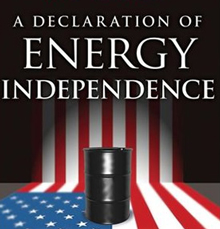
Let me simply say that we in the Democratic Party hope that this administration is serious about improving education and healthcare for all Americans, and addressing such domestic priorities as restoring the vitality of New Orleans.Further, this is the seventh time the President has mentioned energy independence in his state of the union message, but for the first time this exchange is taking place in a Congress led by the Democratic Party.
We are looking for affirmative solutions that will strengthen our nation by freeing us from our dependence on foreign oil, and spurring a wave of entrepreneurial growth in the form of alternate energy programs. We look forward to working with the President and his party to bring about these changes.
There are two areas where our respective parties have largely stood in contradiction, and I want to take a few minutes to address them tonight. The first relates to how we see the health of our economy -- how we measure it, and how we ensure that its benefits are properly shared among all Americans.
The second regards our foreign policy -- how we might bring the war in Iraq to a proper conclusion that will also allow us to continue to fight the war against international terrorism, and to address other strategic concerns that our country faces around the world.
When one looks at the health of our economy, it's almost as if we are living in two different countries. Some say that things have never been better. The stock market is at an all-time high, and so are corporate profits. But these benefits are not being fairly shared. When I graduated from college, the average corporate CEO made 20 times what the average worker did; today, it's nearly 400 times.
In other words, it takes the average worker more than a year to make the money that his or her boss makes in one day.Wages and salaries for our workers are at all-time lows as a percentage of national wealth, even though the productivity of American workers is the highest in the world. Medical costs have skyrocketed. College tuition rates are off the charts. Our manufacturing base is being dismantled and sent overseas. Good American jobs are being sent along with them.
In short, the middle class of this country, our historic backbone and our best hope for a strong society in the future, is losing its place at the table. Our workers know this, through painful experience. Our white-collar professionals are beginning to understand it, as their jobs start disappearing also. And they expect, rightly, that in this age of globalization, their government has a duty to insist that their concerns be dealt with fairly in the international marketplace.
In the early days of our republic, President Andrew Jackson established an important principle of American-style democracy -- that we should measure the health of our society not at its apex, but at its base. Not with the numbers that come out of Wall Street, but with the living conditions that exist on Main Street.
We must recapture that spirit today.And under the leadership of the new Democratic Congress, we are on our way to doing so. The House just passed a minimum wage increase, the first in ten years, and the Senate will soon follow. We've introduced a broad legislative package designed to regain the trust of the American people. We've established a tone of cooperation and consensus that extends beyond party lines. We're working to get the right things done, for the right people and for the right reasons.
With respect to foreign policy, this country has patiently endured a mismanaged war for nearly four years. Many, including myself, warned even before the war began that it was unnecessary, that it would take our energy and attention away from the larger war against terrorism, and that invading and occupying Iraq would leave us strategically vulnerable in the most violent and turbulent corner of the world.
I want to share with all of you a picture that I have carried with me for more than 50 years. This is my father, when he was a young Air Force captain, flying cargo planes during the Berlin Airlift. He sent us the picture from Germany, as we waited for him, back here at home. When I was a small boy, I used to take the picture to bed with me every night, because for more than three years my father was deployed, unable to live with us full-time, serving overseas or in bases where there was no family housing. I still keep it, to remind me of the sacrifices that my mother and others had to make, over and over again, as my father gladly served our country. I was proud to follow in his footsteps, serving as a Marine in Vietnam. My brother did as well, serving as a Marine helicopter pilot. My son has joined the tradition, now serving as an infantry Marine in Iraq.
Like so many other Americans, today and throughout our history, we serve and have served, not for political reasons, but because we love our country. On the political issues -- those matters of war and peace, and in some cases of life and death -- we trusted the judgment of our national leaders. We hoped that they would be right, that they would measure with accuracy the value of our lives against the enormity of the national interest that might call upon us to go into harm's way.We owed them our loyalty, as Americans, and we gave it. But they owed us sound judgment, clear thinking, concern for our welfare, a guarantee that the threat to our country was equal to the price we might be called upon to pay in defending it.
The President took us into this war recklessly. He disregarded warnings from the national security adviser during the first Gulf War, the chief of staff of the army, two former commanding generals of the Central Command, whose jurisdiction includes Iraq, the director of operations on the Joint Chiefs of Staff, and many, many others with great integrity and long experience in national security affairs. We are now, as a nation, held Hostage to the predictable -- and predicted -- disarray that has followed.
The war's costs to our nation have been staggering.
Financially. The damage to our reputation around the world.The lost opportunities to defeat the forces of international terrorism.
And especially the precious blood of our citizens who have stepped forward to serve.The majority of the nation no longer supports the way this war is being fought; nor does the majority of our military. We need a new direction. Not one step back from the war against international terrorism. Not a precipitous withdrawal that ignores the possibility of further chaos.
But an immediate shift toward strong regionally based diplomacy, a policy that takes our soldiers off the streets of Iraq's cities, and a formula that will in short order allow our combat forces to leave Iraq.
On both of these vital issues, our economy and our national security, it falls upon those of us in elected office to take action.Regarding the economic imbalance in our country, I am reminded of the situation President Theodore Roosevelt faced in the early days of the 20th century. America was then, as now, drifting apart along class lines.
The so-called robber barons were unapologetically raking in a huge percentage of the national wealth. The dispossessed workers at the bottom were threatening revolt.Roosevelt spoke strongly against these divisions. He told his fellow Republicans that they must set themselves "as resolutely against improper corporate influence on the one hand as against demagogy and mob rule on the other."
And he did something about it.As I look at Iraq, I recall the words of former general and soon-to-be President Dwight Eisenhower during the dark days of the Korean War, which had fallen into a bloody stalemate. "When comes the end?" asked the General who had commanded our forces in Europe during World War Two. And as soon as he became President, he brought the Korean War to an end.
These presidents took the right kind of action, for the benefit of the American people and for the health of our relations around the world. Tonight we are calling on this president to take similar action, in both areas. If he does, we will join him. If he does not, we will be showing him the way.
Thank you for listening. And God bless America.
* WILL CONGRESSIONAL DEMOCRATS TAKE ACTION ON TRADE ?
Two research fellows from the U.S. Business and Industry Council Educational Foundation ask an important question. Will the Democrats move quickly to re-shape our broken trade policies ?
American Economic Alert
Alan Tonelson and Peter Kim
FridayJanuary 26, 2007
One of the most widespread political predictions being made in Washington these days is that the new Democratic-controlled Congress will press for big changes in U.S. trade policy. One of the clearest possible tests of the Democrats’ determination to make big fixes – and provide badly needed relief for American producers and their workers – would be the prompt passage of the currency manipulation bill proposed in 2005 by Ohio Democratic Representative Tim Ryan and former House Armed Services Committee Chairman Duncan Hunter, a Republican from San Diego now running for president.
The bill’s main provisions would designate China’s (or any other country’s) policy of deeply undervaluing its currency as an illegal subsidy against which American victims can win compensatory tariffs through the U.S. trade law system.
Ryan-Hunter is no cure-all for the damage inflicted on domestic industry by the totality of China’s predatory trade practices. Beijing has displayed the ability and the willingness to shuffle the forms its protectionism takes to keep its trading partners off balance. But the bill would significantly narrow one of China’s most significant unfair advantages and would represent a big step forward in America’s willingness to take necessary defensive action.
Just as important, Ryan-Hunter’s swift passage will create powerful momentum for defeating the president’s request to renew his fast-track trade negotiating authority later this year, and for halting the rest of his outsourcing-centered trade agenda dead in its tracks.Ryan-Hunter already boasts major political advantages.
There’s a strong case that it’s legal under the World Trade Organization’s rules – to the extent that WTO legality can be reliably predicted. And rightly or wrongly, WTO-legality is still an important consideration for legislators.The measure also attracted more than 170 co-sponsors in the last Congress, and to underscore its bipartisan nature, Ryan and Hunter skillfully maintained a balance between Democratic and Republican supporters.
A Senate version was eventually introduced late last September, without co-sponsors, by Sen. Jim Bunning (R-KY). Both bills contain national security provisions, which means that they fall under the purview of the Armed Services committees as well as the traditionally outsourcing-happy House Ways and Means and Senate Finance Committees.
Further, even many domestic manufacturing groups still hesitant to oppose current trade policies broad-brush are enthusiastic about Ryan-Hunter. Therefore, any Congressional actors instrumental to the bill’s passage could endear themselves big-time to this constituency.More important, the main obstacle to Ryan-Hunter was the Congressional Republican leadership – which voters tossed out of power in November.
As a result, the way should be clear for the avowed party of the common man to push the bill through, at least in the House. (Senate rules make matters more complicated in the upper chamber.) When a session of Congress ends, all un-passed legislation disappears in a procedural sense and needs to start over from scratch in the following session. But the picture still looks highly promising for Ryan-Hunter.
Of the 170-plus co-sponsors, nearly160 are returning to the House. This means that of the 233 Democrats comprising the new House’s majority, more than 36 percent have already co-sponsored Ryan-Hunter, as have more than 36 percent of the 202 Republicans who make up the minority.In all, the bill in theory has already attracted more than 71 percent of the votes needed for a House majority of 218.
The situation in the two House committees of jurisdiction – Ways and Means and Armed Services – is mixed. Fifty of the 61 members of the new Armed Services Committee are returnees, and 36 are Ryan-Hunter co-sponsors. Interestingly, Republican supporters on the committee outnumber Democrats, with four out of their five senior-most members on board (including lead co-sponsor Hunter).
On Ways and Means, however, only nine of the current 41 members (all returnees) have co-sponsored Ryan-Hunter. Six are Democrats, including second-ranking Democrat Fortney Pete Stark of California. Still to hop aboard: slightly more than 105 Democratic returnees and 40 Democratic freshmen, along with about 120 Republican returnees and 13 Republican freshmen.
Yet with such a big head start, reaching a House majority, especially with the new Democratic leadership’s help, should be easily within reach. Major change on the Republican side should boost Ryan-Hunter’s chances as well.Many in this session's Republican ranks are staunch supporters of current trade policies and will surely continue fighting Ryan-Hunter – like Minority Leader John Boehner of Ohio and Minority Whip Roy Blunt of Missouri.
But not only are the Republicans fewer in number this time around, they also have lost some of their most fervent ideological free trade leaders through resignation and retirement.Moreover, many of the Democratic returnees who haven’t yet signed onto Ryan-Hunter have solid records of voting for better trade policies.
At least two dozen other House Democrats have voted reliably against the outsourcing trade agenda since fellow Democrat Bill Clinton left the White House, and numerous others were at least ready to oppose the Bush administration when it made CAFTA a high-profile political battle.
Will the leadership follow the likely will of the majority of the Democratic caucus – and perhaps the majority of the House?
Ways and Means Chairman Charles Rangel (D-NY) will play a key role here – and unlike his acerbic and dictatorial free trade predecessor, Bill Thomas, Rangel is much more likely to approach the issue with an open mind. Although in the past he has voted for many free trade deals, Rangel voted against the Central America Free Trade Agreement and opposed the last extension of fast track trade negotiating authority. Rangel recently suggested that trade policy is one area where the administration and the new Democratic Congress could work well together, but on whose terms is unclear.
The stakes are pretty high – nothing less than survival of domestic American manufacturing. If Ryan-Hunter can’t pass a Democratic-controlled House reasonably quickly, the broader campaign to reform trade policy could be seriously undercut.
At the same time, with a big leadership push, new trade policies are entirely achievable in both the House and the Senate. Are the Democrats ready to seize this historic opportunity, and put Washington on the side of American producers and working families once again? The fate of Ryan-Hunter in the next few months will go far toward answering this central question.
http://www.americaneconomicalert.org/
Congressional Democrats must act to reform our trade policies which have led to a massive trade deficit, a loss of national industrial capacity and destruction of millions of good paying jobs.
Adams writes in the informative Atomic Insights blog:
For the past 30 years, there has been a perception, sometimes reinforced by actions and statements, that the US Democratic Party is reflexively anti-nuclear. At the same time, it has been the perception, sometimes reinforced with words, if not action, that the Republican Party at least wants to "keep the nuclear option open".
When involved in discussions with people in the industry or related academic or government fields, I have tried to persuade people that these perceptions are over simplified and not terribly useful to the continued development of safe, clean, abundant nuclear energy.I remind people that some of the major political support for the technology in its earliest days came from strong Democrats like Senator Al Gore Sr., Senator Henry M. Jackson and L. Mendel Rivers. I also point out that it was President Ford, not President Carter who initially signed the Executive Order that forced the shutdown of the nuclear fuel recycling industry just when it was getting to a point where it could start operating profitably.
http://tinyurl.com/267zuh
Another article also suggests increasing Democratic backing for expanded nuclear power as a means of reducing greenhouse gas emissions which contribute to global warming.
James Hoare
Environment News
Publication Date: February 1, 2007
The Heartland Institute
http://www.heartland.org/
Nuclear power offers a safe and economical way to meet anticipated growth in American energy demand, according to an October 2006 report by the Progressive Policy Institute, a policy arm of the Democratic Leadership Council (DLC).The report, "A Progressive Energy Platform," praises nuclear power as a key weapon against asserted global climate change and air quality concerns."
Nuclear power holds great potential to be an integral part of a diversified energy portfolio for America," the report states. "It produces no greenhouse gas emissions, so it can help clean up the air and combat climate change."
New Technological Advances
Key to the DLC's support for nuclear power are technological advances that substantially improve on an already impressive safety and environmental record."
New plant designs promise to produce power more safely and economically than first-generation facilities," the report explains. "For example, the Nuclear Regulatory Commission (NRC) has certified three new designs that would use significantly fewer pumps, pipes, valves, and cables than first-generation facilities."
That will reduce the plants' complexity, making them easier to inspect and maintain," the report continues. "From a safety perspective, the new plants rely on natural forces such as gravity, natural circulation, and condensation, assuring safe shutdown even in the event of an accident."
The report also notes further advances in nuclear plant design."In addition to these three new approved designs," the report adds, "at least four other designs may soon win NRC approval. Among these is the promising modular, 'pebble bed' reactor design.
As the name suggests, these smaller plants would use hundreds of thousands of uranium pebbles rather than large cores to generate power. As researchers at MIT recently concluded, these pebbles burn more completely than their traditional counterparts."
Deregulation Needed
We certainly welcome the Progressive Policy Institute support," Nuclear Energy Institute spokesman Steve Kerekes said. "It reflects the fact that there is considerable bipartisan support for nuclear energy and there has been support for a long time." We anticipate this report will have a positive impact among Democrats and among citizens as a whole," Kerekes added. "Support for clean, safe, and economical nuclear power continues to build all across America."
http://tinyurl.com/2bcxxn
* JIM WEBB EMERGES AS A PRESIDENTIAL POSSIBLITY
Before watching his electrifying response to the Bush State of the Union address, I had no idea that Jim Webb was in the ranks of great communicators like JFK and Ronald Reagan. With a mix of populism and patriotism, Webb is the one of the few political leaders who have any grasp of how to restore America's sense of unity and purpose.
Maybe a Presidential candidacy this soon in his political career seems unrealistic, but Jim Webb impresses me far more than any of the current Democratic (or Republican) Presidential prospects for 2008. Webb could attract support from across the political spectrum. There is no other political figure that I am aware of getting praise from The Nation http://tinyurl.com/38qmc9 on the left and The American Conservative http://tinyurl.com/2sg5wt on the right.
Even most students of politics have probably forgotten that Ronald Reagan first sought the Republican Presidential nomination in 1968 - only two years after his election as Governor of California. And unlike Webb, Reagan had never served as Navy Secretary. If Nixon had lost the close 1968 election to Humphrey, Reagan might well have won the Presidency in 1972 instead of 1980.My guess is that John McCain is our most likely next President leaving another open Democratic race in 2012. Webb could run in 2008 and put himself a strong position to win another four years down the road.
Just in case you missed it, here is the text of Jim Webb's great speech:
Good evening.I'm Senator Jim Webb, from Virginia, where this year we will celebrate the 400th anniversary of the settlement of Jamestown -- an event that marked the first step in the long journey that has made us the greatest and most prosperous nation on earth.It would not be possible in this short amount of time to actually rebut the President's message, nor would it be useful.
Let me simply say that we in the Democratic Party hope that this administration is serious about improving education and healthcare for all Americans, and addressing such domestic priorities as restoring the vitality of New Orleans.Further, this is the seventh time the President has mentioned energy independence in his state of the union message, but for the first time this exchange is taking place in a Congress led by the Democratic Party.
We are looking for affirmative solutions that will strengthen our nation by freeing us from our dependence on foreign oil, and spurring a wave of entrepreneurial growth in the form of alternate energy programs. We look forward to working with the President and his party to bring about these changes.
There are two areas where our respective parties have largely stood in contradiction, and I want to take a few minutes to address them tonight. The first relates to how we see the health of our economy -- how we measure it, and how we ensure that its benefits are properly shared among all Americans.
The second regards our foreign policy -- how we might bring the war in Iraq to a proper conclusion that will also allow us to continue to fight the war against international terrorism, and to address other strategic concerns that our country faces around the world.
When one looks at the health of our economy, it's almost as if we are living in two different countries. Some say that things have never been better. The stock market is at an all-time high, and so are corporate profits. But these benefits are not being fairly shared. When I graduated from college, the average corporate CEO made 20 times what the average worker did; today, it's nearly 400 times.
In other words, it takes the average worker more than a year to make the money that his or her boss makes in one day.Wages and salaries for our workers are at all-time lows as a percentage of national wealth, even though the productivity of American workers is the highest in the world. Medical costs have skyrocketed. College tuition rates are off the charts. Our manufacturing base is being dismantled and sent overseas. Good American jobs are being sent along with them.
In short, the middle class of this country, our historic backbone and our best hope for a strong society in the future, is losing its place at the table. Our workers know this, through painful experience. Our white-collar professionals are beginning to understand it, as their jobs start disappearing also. And they expect, rightly, that in this age of globalization, their government has a duty to insist that their concerns be dealt with fairly in the international marketplace.
In the early days of our republic, President Andrew Jackson established an important principle of American-style democracy -- that we should measure the health of our society not at its apex, but at its base. Not with the numbers that come out of Wall Street, but with the living conditions that exist on Main Street.
We must recapture that spirit today.And under the leadership of the new Democratic Congress, we are on our way to doing so. The House just passed a minimum wage increase, the first in ten years, and the Senate will soon follow. We've introduced a broad legislative package designed to regain the trust of the American people. We've established a tone of cooperation and consensus that extends beyond party lines. We're working to get the right things done, for the right people and for the right reasons.
With respect to foreign policy, this country has patiently endured a mismanaged war for nearly four years. Many, including myself, warned even before the war began that it was unnecessary, that it would take our energy and attention away from the larger war against terrorism, and that invading and occupying Iraq would leave us strategically vulnerable in the most violent and turbulent corner of the world.
I want to share with all of you a picture that I have carried with me for more than 50 years. This is my father, when he was a young Air Force captain, flying cargo planes during the Berlin Airlift. He sent us the picture from Germany, as we waited for him, back here at home. When I was a small boy, I used to take the picture to bed with me every night, because for more than three years my father was deployed, unable to live with us full-time, serving overseas or in bases where there was no family housing. I still keep it, to remind me of the sacrifices that my mother and others had to make, over and over again, as my father gladly served our country. I was proud to follow in his footsteps, serving as a Marine in Vietnam. My brother did as well, serving as a Marine helicopter pilot. My son has joined the tradition, now serving as an infantry Marine in Iraq.
Like so many other Americans, today and throughout our history, we serve and have served, not for political reasons, but because we love our country. On the political issues -- those matters of war and peace, and in some cases of life and death -- we trusted the judgment of our national leaders. We hoped that they would be right, that they would measure with accuracy the value of our lives against the enormity of the national interest that might call upon us to go into harm's way.We owed them our loyalty, as Americans, and we gave it. But they owed us sound judgment, clear thinking, concern for our welfare, a guarantee that the threat to our country was equal to the price we might be called upon to pay in defending it.
The President took us into this war recklessly. He disregarded warnings from the national security adviser during the first Gulf War, the chief of staff of the army, two former commanding generals of the Central Command, whose jurisdiction includes Iraq, the director of operations on the Joint Chiefs of Staff, and many, many others with great integrity and long experience in national security affairs. We are now, as a nation, held Hostage to the predictable -- and predicted -- disarray that has followed.
The war's costs to our nation have been staggering.
Financially. The damage to our reputation around the world.The lost opportunities to defeat the forces of international terrorism.
And especially the precious blood of our citizens who have stepped forward to serve.The majority of the nation no longer supports the way this war is being fought; nor does the majority of our military. We need a new direction. Not one step back from the war against international terrorism. Not a precipitous withdrawal that ignores the possibility of further chaos.
But an immediate shift toward strong regionally based diplomacy, a policy that takes our soldiers off the streets of Iraq's cities, and a formula that will in short order allow our combat forces to leave Iraq.
On both of these vital issues, our economy and our national security, it falls upon those of us in elected office to take action.Regarding the economic imbalance in our country, I am reminded of the situation President Theodore Roosevelt faced in the early days of the 20th century. America was then, as now, drifting apart along class lines.
The so-called robber barons were unapologetically raking in a huge percentage of the national wealth. The dispossessed workers at the bottom were threatening revolt.Roosevelt spoke strongly against these divisions. He told his fellow Republicans that they must set themselves "as resolutely against improper corporate influence on the one hand as against demagogy and mob rule on the other."
And he did something about it.As I look at Iraq, I recall the words of former general and soon-to-be President Dwight Eisenhower during the dark days of the Korean War, which had fallen into a bloody stalemate. "When comes the end?" asked the General who had commanded our forces in Europe during World War Two. And as soon as he became President, he brought the Korean War to an end.
These presidents took the right kind of action, for the benefit of the American people and for the health of our relations around the world. Tonight we are calling on this president to take similar action, in both areas. If he does, we will join him. If he does not, we will be showing him the way.
Thank you for listening. And God bless America.
* WILL CONGRESSIONAL DEMOCRATS TAKE ACTION ON TRADE ?
Two research fellows from the U.S. Business and Industry Council Educational Foundation ask an important question. Will the Democrats move quickly to re-shape our broken trade policies ?
American Economic Alert
Alan Tonelson and Peter Kim
FridayJanuary 26, 2007
One of the most widespread political predictions being made in Washington these days is that the new Democratic-controlled Congress will press for big changes in U.S. trade policy. One of the clearest possible tests of the Democrats’ determination to make big fixes – and provide badly needed relief for American producers and their workers – would be the prompt passage of the currency manipulation bill proposed in 2005 by Ohio Democratic Representative Tim Ryan and former House Armed Services Committee Chairman Duncan Hunter, a Republican from San Diego now running for president.
The bill’s main provisions would designate China’s (or any other country’s) policy of deeply undervaluing its currency as an illegal subsidy against which American victims can win compensatory tariffs through the U.S. trade law system.
Ryan-Hunter is no cure-all for the damage inflicted on domestic industry by the totality of China’s predatory trade practices. Beijing has displayed the ability and the willingness to shuffle the forms its protectionism takes to keep its trading partners off balance. But the bill would significantly narrow one of China’s most significant unfair advantages and would represent a big step forward in America’s willingness to take necessary defensive action.
Just as important, Ryan-Hunter’s swift passage will create powerful momentum for defeating the president’s request to renew his fast-track trade negotiating authority later this year, and for halting the rest of his outsourcing-centered trade agenda dead in its tracks.Ryan-Hunter already boasts major political advantages.
There’s a strong case that it’s legal under the World Trade Organization’s rules – to the extent that WTO legality can be reliably predicted. And rightly or wrongly, WTO-legality is still an important consideration for legislators.The measure also attracted more than 170 co-sponsors in the last Congress, and to underscore its bipartisan nature, Ryan and Hunter skillfully maintained a balance between Democratic and Republican supporters.
A Senate version was eventually introduced late last September, without co-sponsors, by Sen. Jim Bunning (R-KY). Both bills contain national security provisions, which means that they fall under the purview of the Armed Services committees as well as the traditionally outsourcing-happy House Ways and Means and Senate Finance Committees.
Further, even many domestic manufacturing groups still hesitant to oppose current trade policies broad-brush are enthusiastic about Ryan-Hunter. Therefore, any Congressional actors instrumental to the bill’s passage could endear themselves big-time to this constituency.More important, the main obstacle to Ryan-Hunter was the Congressional Republican leadership – which voters tossed out of power in November.
As a result, the way should be clear for the avowed party of the common man to push the bill through, at least in the House. (Senate rules make matters more complicated in the upper chamber.) When a session of Congress ends, all un-passed legislation disappears in a procedural sense and needs to start over from scratch in the following session. But the picture still looks highly promising for Ryan-Hunter.
Of the 170-plus co-sponsors, nearly160 are returning to the House. This means that of the 233 Democrats comprising the new House’s majority, more than 36 percent have already co-sponsored Ryan-Hunter, as have more than 36 percent of the 202 Republicans who make up the minority.In all, the bill in theory has already attracted more than 71 percent of the votes needed for a House majority of 218.
The situation in the two House committees of jurisdiction – Ways and Means and Armed Services – is mixed. Fifty of the 61 members of the new Armed Services Committee are returnees, and 36 are Ryan-Hunter co-sponsors. Interestingly, Republican supporters on the committee outnumber Democrats, with four out of their five senior-most members on board (including lead co-sponsor Hunter).
On Ways and Means, however, only nine of the current 41 members (all returnees) have co-sponsored Ryan-Hunter. Six are Democrats, including second-ranking Democrat Fortney Pete Stark of California. Still to hop aboard: slightly more than 105 Democratic returnees and 40 Democratic freshmen, along with about 120 Republican returnees and 13 Republican freshmen.
Yet with such a big head start, reaching a House majority, especially with the new Democratic leadership’s help, should be easily within reach. Major change on the Republican side should boost Ryan-Hunter’s chances as well.Many in this session's Republican ranks are staunch supporters of current trade policies and will surely continue fighting Ryan-Hunter – like Minority Leader John Boehner of Ohio and Minority Whip Roy Blunt of Missouri.
But not only are the Republicans fewer in number this time around, they also have lost some of their most fervent ideological free trade leaders through resignation and retirement.Moreover, many of the Democratic returnees who haven’t yet signed onto Ryan-Hunter have solid records of voting for better trade policies.
At least two dozen other House Democrats have voted reliably against the outsourcing trade agenda since fellow Democrat Bill Clinton left the White House, and numerous others were at least ready to oppose the Bush administration when it made CAFTA a high-profile political battle.
Will the leadership follow the likely will of the majority of the Democratic caucus – and perhaps the majority of the House?
Ways and Means Chairman Charles Rangel (D-NY) will play a key role here – and unlike his acerbic and dictatorial free trade predecessor, Bill Thomas, Rangel is much more likely to approach the issue with an open mind. Although in the past he has voted for many free trade deals, Rangel voted against the Central America Free Trade Agreement and opposed the last extension of fast track trade negotiating authority. Rangel recently suggested that trade policy is one area where the administration and the new Democratic Congress could work well together, but on whose terms is unclear.
The stakes are pretty high – nothing less than survival of domestic American manufacturing. If Ryan-Hunter can’t pass a Democratic-controlled House reasonably quickly, the broader campaign to reform trade policy could be seriously undercut.
At the same time, with a big leadership push, new trade policies are entirely achievable in both the House and the Senate. Are the Democrats ready to seize this historic opportunity, and put Washington on the side of American producers and working families once again? The fate of Ryan-Hunter in the next few months will go far toward answering this central question.
http://www.americaneconomicalert.org/
Congressional Democrats must act to reform our trade policies which have led to a massive trade deficit, a loss of national industrial capacity and destruction of millions of good paying jobs.




No comments:
Post a Comment