Colorado's "right to work for less" Amendment 47 is a bad idea.
• Unions protect workers' rights and working conditions when unscrupulous business owners won't. For over 125 years in Colorado, through collective bargaining, unions have pushed business back from infringing on workers' rights. Millions of workers have experienced the benefits brought by collective bargaining through unions.
• Amendment 47 is corporate-crafted legislation attempting to destroy and eliminate the union collective bargaining system. It attempts to strip away workers' wages and rights in Colorado, depicting union membership as an infringement upon freedom of choice.
• The sponsors of Amendment 47 are attempting to drive down wages, benefits and working conditions of workers in Colorado. These results have already been seen in other states that have passed similar bills. This legislation fosters wage suppression to create larger profits for rich corporations.
• Amendment 47 is not about workers' rights. It falsely claims to grant a new freedom to workers before being hired. Once hired and without the union, the worker must play by a new set of rules in favor of the corporation and bent against the worker's freedoms.
• Unions are non-profit organizations designed to protect employees. The sponsors of Amendment 47 know that this legislation will drastically alter the funding of unions through membership. Without funding, the union will cease to exist, leaving employers free to cut wages, benefits, and training with no organization to defend the rights of the worker. No non-profit organization can operate without a budget.

Sunday, November 02, 2008
Amendment 47 is Wrong for Colorado


Major Central Florida daily endorses Amendment 2

Florida's Marriage Protection Amendment has received the endorsement of a major Central Florida newspaper. In a Sunday editorial, The Winter Haven News-Chief called for passage of Amendment 2:
The "Florida Marriage Protection Amendment" is the only citizen-sponsored amendment on the ballot. The rest were placed by the Legislature and a state tax commission.
The purpose of the amendment is to define marriage as the legal union of only one man and one woman. Supporters say that following state supreme court rulings allowing gay marriages in Massachusetts, California and Connecticut, the 1997 Florida Defense of Marriage Act isn't safe from being overturned by the Florida high court. They want the "one man-one woman" definition of marriage embedded in the Florida Constitution, just like 27 other states have done.
Opponents fear the amendment would invalidate domestic partnerships offered by some counties and private companies, but we don't see this provision having that kind of reach.
We support this amendment but also recognize that same-sex partners should have other civil means to enter into agreements covering property sharing and transfer, health and medical matters, insurance benefits and end-of-life decisions.
http://www.newschief.com/article/20081102/NEWS/811020306/1013/OPINION?Title=Vote__Yes__on_all_state_measures
Jerry Springer on C-SPAN - Believe It or Not, Worth Watching !
I am not a big fan of Jerry Springer - the TV talk host - but Springer gives an excellent speech on how to fix what is wrong with America on C-SPAN. Springer presents the best case of progressive ideals that I've heard in a long time. Toward the end of the speech, Springer takes liberals to task for elitism and cautions against making fun of religion and middle America. It's well worth watching.
Tuesday, October 28, 2008
The Case for Florida Marriage Protection Amendment 2
Saint Leo University's student newspaper The Lion's Pride makes the case for support of Florida's Marriage Protection Amendment 2.
Vote "yes" on Amendment 2
October 24, 2008
BY JOSHUA M. SMITH
Lions’ Pride Online Editor
Marriage is the union of one man and one woman. That is what the word “marriage” means. It’s a shame, but, due to the Gay Rights lobby, Floridians now find it necessary to write that definition into law.
Amendment 2, which will appear on the November 4 ballots in Florida, states, “In as much as a marriage is the legal union of only one man and one woman as husband and wife, no other legal union that is treated as marriage or the substantial equivalent thereof shall be valid or recognized.”
This amendment is not anti-gay. It does not make gays second-class citizens. It merely upholds Florida’s right to define marriage for itself.
Without Amendment 2, Florida finds itself in a position to have to arbitrarily decide whether gay marriage agreements from other states such as Massachusetts and California should be honored by Florida gays who travel to those states and get married under those states’ laws.
Whether one feels that gays should be allowed to marry or not, this issue should not be decided for Florida by the legislature or courts of another state. State sovereignty must be upheld, because allowing one state to set policy and law for another state sets a dangerous precedent for the entire nation.
That is why all Floridians—gay or straight—should vote “yes” on Amendment 2.
A vote of “no” does nothing to advance the cause of gay rights and gay marriage. Under current law, gays are allowed to enter into any legal agreement they wish. Gay couples live together, raise children together, visit each other in the hospital, and receive domestic partner health benefits already without being “married.”
If gay couples already enjoy the same perceived benefits as married couples, what then is the point of working to allow gays to be married?
After following the issue for several years, I have found no satisfactory and reasonable answer to that question. Gays’ desire for the right to marry is often nothing more than a coercive attempt to force society to accept their behavior.
If gays want to live the way they live, why must a heterosexual agree with that lifestyle? Why must a heterosexual society condone and endorse that lifestyle through its laws?
The answer too often is “so gays can feel better about themselves,” which is unfortunate, since gays ought to be deciding the value of their lifestyle on their own terms rather than looking to society to justify it for them.
If gays want to be gay, fine. But, gays shouldn’t expect others to agree with their lifestyle. I like owning a gun, but I do not feel the need to require other people to like the idea of me owning a gun. So long as no one tries to pass a law telling me I do not have the right to own a gun, I am satisfied.
Likewise, gays ought to find satisfaction in the equality they enjoy in America. Gays can do everything heterosexuals can in terms of what really matters: partnership, parenthood, and equal treatment under the law. Anything they choose to agitate for beyond that equality equates to special treatment, which actuality works against their interests by setting them further apart from others.
Florida’s Amendment 2 is a defense of state sovereignty. It is not an attempt to curtail anyone’s rights. As such, every Floridian has a duty to vote “yes” on Amendment 2 in order to stop other states from being able to tell Florida what to do.
If California is allowed to tell Florida what to do on the gay marriage issue, just imagine what other states such as Texas might then be able to tell Florida what to do on issues such as oil drilling. We as Floridians must act now to stop such intrusion into our laws by other states. A vote of “yes” on Amendment 2 is an important first step to that end.
http://pride-online.net/wp/2008/10/24/vote-%E2%80%9Cyes%E2%80%9D-on-amendment-2-pic-more/
Sunday, October 26, 2008
Why Obama has pulled ahead on the economic issues
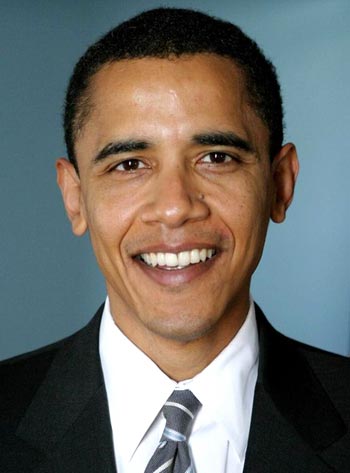
Mark Weisbrot of the Center for Economic and Policy Research explains why Obama has a solid lead over McCain on pocketbook issues. Voters will simply not tolerate another four years of trickle down economics.
Weisbrot writes:
Senator Barack Obama’s campaign for the White House pulled ahead of his opponent, Senator John McCain, as soon as the current financial crisis hit the headlines. As one of McCain’s top strategists recently blurted out, "If we keep talking about the economic crisis, we're going to lose."
There’s a reason for this well-established trend that the Democrats tend to win among those who vote on economic issues. Although both parties are subject to undue influence from powerful corporate interests, the Republicans have been much more consistent in advocating government policies that redistribute income from working and middle-class Americans to the rich. They are also much less friendly to the most important government programs that insure people against economic catastrophe, such as Social Security and Medicare.
These partisan differences are evident in the current presidential campaign. On Social Security, McCain has in the past supported President Bush’s partial privatization plan, which was rightly rejected as an attempt to undermine the nation’s most important anti-poverty program and social safety net. McCain has also undermined Social Security by wildly misrepresenting its financial condition, alleging that the program is “going broke.” (For the record, according to the non-partisan Congressional Budget Office, Social Security will pay all promised benefits for the next 40 years without any changes whatsoever. It would need only minor changes, less than those adopted in each of the decades of the 1950s, 60s, 70s, and 80s to remain solvent for 75 years).
Obama rejects privatization of Social Security – as well as Medicare, where the Republicans have increased the role of private insurance companies by giving them wasteful taxpayer subsidies. On health care, one of the most interesting features of Obama’s proposal is the establishment of a public insurance program similar to Medicare, which employers and uninsured individuals could buy into. This would be subsidized and could be an important step towards universal health insurance.
McCain wants people to buy their own private health insurance. He is willing to give them a subsidy from the government, but the $5000 he offers is far less than the $12,500 it costs to insure a typical family. Even worse, he proposes to tax the health insurance benefits provided by employers, which are currently tax-free. This would be a hefty tax increase for tens of millions of working Americans. It also puts at risk the health insurance of many of the 160 million people who depend on employment-based insurance policies.
McCain has also been reluctant to support a fiscal stimulus that will be necessary to limit the size and duration of the current downturn. This could be a costly mistake. As consumers cut back on spending – which is already happening this quarter -- the recession will deepen unless the government is willing to make up for it. Obama has proposed a stimulus package that is too small, but will almost certainly support larger plans that will come from the Democratic Congress.
McCain has proposed yet another cut in the capital gains tax – from 15 percent to 7.5 percent. This would go overwhelmingly to rich people, and would have little or no effect on economic growth. He also wants to make permanent President Bush’s tax cuts for rich households. By contrast, Obama has proposed to cut taxes for everyone earning under $250,000 – about ninety-five percent of taxpayers – and pay for it with an increase on the five percent who make more than that.
With millions of Americans facing foreclosure notices on their homes, insufficient and collapsed retirement savings, rising unemployment, falling real wages, and what is likely the worst recession for at least three decades – it’s getting tougher to distract voters from the most important economic issues that affect their lives. Hence, the Republicans’ bad luck in the polls.
http://www.cepr.net/index.php/op-eds-&-columns/op-eds-&-columns/why-obama-has-pulled-ahead-on-the-economic-issues/
Saturday, October 25, 2008
Bob Conley supports core issues of Democratic Party Platform

COLUMBIA, SC October 24, 2008 − Democratic challenger Bob Conley, running for South Carolina’s U.S. Senate seat against incumbent Senator Lindsey Graham (R), is refuting the idea that he is out of step with the Democratic Party.
“I support the Democratic National Committee platform on the key issues that matter most to South Carolinians,” Conley said. “Naturally, I have my own ideas on how best to achieve these goals, but I agree on the fundamentals and the need for change,” said Conley.
Conley pointed to the following areas of concern that he shares with South Carolinians and the Democratic Party:
*Restoring fiscal responsibility in Washington.
*Ensuring that Americans have good jobs with good pay.
*Establishing energy independence and security, and promoting alternative sources.
*Ending the occupation of Iraq.
*Ensuring strong Fair Trade policies.
*Protecting civil liberties.
*Rebuilding our national infrastructure.
*Reasserting regulatory oversight of the financial sector.
*Restoring fairness to our tax code.
*Revitalizing and supporting our military.
*Restoring the readiness of Guard and Reserve.
*Supporting our injured and returning veterans better.
*Working for open, accountable and ethical government.
“Democrats cannot afford to be comfortable with Republican incumbent Lindsey Graham,” said Conley. “Graham is one of the key players in Congress who is taking South Carolina and the nation down the path of economic ruin and global military adventurism, while voting to expand federal power and wrap it in a blanket of secrecy that robs American citizens of their Constitutional rights and liberties,” Conley said.
“I call on all Democrats, Independents, Republicans and others in South Carolina to wholeheartedly support my campaign against Lindsey Graham. We cannot afford another six years of losing jobs in South Carolina to bad trade deals and fiscal incompetence, while ineptly policing the globe and allowing the nation’s infrastructure to rot,” Conley said. “South Carolinians are hurting from the policies Lindsey Graham voted for in the last six years, and he continues to defend those policies. It’s time for South Carolinians to strike a ballot-box blow to end Graham’s political career,” said Conley.
About Bob Conley
Running for U.S. Senate from South Carolina, Bob Conley is a Commercial Pilot and a Flight Instructor as well as a licensed Professional Engineer with degrees in Civil Engineering and Mechanical Engineering. To learn more about Bob and his positions on the important issues facing South Carolinians, please visit www.BobConleyforSenate.com
Thursday, October 09, 2008
Number of U.S. workers with employer-provided health coverage down for the 7th year

The health insurance most Americans receive, employer-sponsored insurance (ESI), has dwindled each year since 2000, according to a report released today by the Economic Policy Institute [www.epi.org]. The Erosion of Employer-Sponsored Health Insurance, by EPI economist Elise Gould, focuses on the decline of ESI coverage - the coverage most Americans receive, as well as the type of coverage that has seen the steepest decline.
About 62.9 % of Americans under the age of 65 were covered by ESI in 2007, over 3 million fewer than in 2000. Having a job does not guarantee ESI coverage. Since 2000, the number of uninsured workers has grown by 4.1 million workers. About 45 million people under 65 are without health insurance coverage.
As unemployment rises across the nation, larger declines in ESI are expected. “The health care problem has reached a critical level,” said Gould. “Bold new solutions need to be considered to address the growing crisis.”
ESI coverage varies between states. For instance, Hawaii, which requires employers to provide health insurance to employees who work 20 hours or more per week, has a high rate of employer-sponsored coverage. Currently, the states with the highest employer-provided coverage rates for those under 65 are New Hampshire (75.4%), Hawaii (72.5%), and Connecticut (72.3%). The lowest coverage rates were found in New Mexico (50.7%), Texas (53.5%), and Mississippi (53.7%). (See Snapshot.) http://www.epi.org/content.cfm/webfeatures_snapshots_20081009
The decline in ESI coverage of children has left over 3.4 million fewer children covered in 2007 than in 2000. Coverage by publicly provided health insurance like Medicaid and the State Children’s Health Insurance Coverage Program (SCHIP) has increased to cover the slack.
“It is only the strength of government programs, particularly those aimed at children, that has insulated many from losses in coverage,” said Gould. “The trends indicate a significant shift from private to public coverage, especially among children.”
The erosion of employer-sponsored health insurance: Declines continue for the seventh year running.
http://www.epi.org/briefingpapers/223/bp223.pdf
Tuesday, October 07, 2008
Epoch Times: Potentially Contaminated Products from China flowing into U.S.

The Epoch Times http://en.epochtimes.com reports:
Countries around the world are working to ban the import of melamine-contaminated products from China. But in the U.S., melamine-products and ingredients continue to flow through ports of entry, almost unchecked.
There have been widespread worldwide reports in recent weeks of milk products from China contaminated with melamine. The industrial chemical was also at the core of a series of pet food recalls in 2007. At least four infants in China have died from ingesting melamine-tainted baby formula
"We're very leery of the Chinese food safety system," says Tony Corbo, Legislative Representative for Food and Water Watch. "At best it's weak, at worst it's corrupt. It just reeks with corruption." Food and Water Watch is a nonprofit consumer organization that works on food and water safety issues.
Last month, the FDA issued an advisory that there is "no known threat of contamination in infant formula manufactured by companies that have met the requirements to sell such products in the United States." The same advisory warned that infant formula manufactured in China could pose a risk.
Some are not convinced that imports from China are safe for public consumption, though.
"The recent scandal involving contaminated milk products from China clearly demonstrates that significant work remains for China to reform its food safety system," said Congresswoman Rosa L. DeLauro (CT-3) in a statement on Oct. 3.
"While the FDA has said that no contaminated baby formula has been legally imported into the U.S. from China, it is certainly possible that other dairy products including powdered milk and milk protein products have entered the United States, as they have in Europe." DeLauro is Chairwoman of the Agriculture, Food and Drug Administration Appropriations Subcommittee.
Congresswoman DeLauro and Senator Richard J. Durbin (D-IL) sent a letter to the FDA seeking information about the status of ongoing investigations into the safety of products from China. Their letter points to the catastrophic results of delays in reports of contaminated products inside China — 54,000 sickened, 13,000 hospitalized, and at least four dead infants.
"According to the World Health Organization, delays in reporting, including a deliberate failure to report, contributed to the magnitude of the incident," states the letter, which was addressed to Andrew C. von Eschenbach, Commissioner of the FDA.
Corbo says that the FDA has a limited capacity to check imports from over 200 countries, of which China is only one. The risk is that contaminated products are flowing in, undetected, which is the same reason that other countries are stopping the flow of milk products altogether.
"They're finding contaminated milk powder in a bunch of other countries," says Corbo. "It's endless as far as how many things could be contaminated."
U.S. Blue Cat Flavor Drinks, White Rabbit Creamy Candies and Mr. Brown instant coffee and milk tea products were found to contain melamine. Recalls of the products are underway, and according to the FDA no known cases of illness have occurred in the U.S.
Media reports have named at least 41 countries that have imposed restrictions on Chinese products containing dairy items.
At least 25 of these 41 countries have imposed blanket bans on Chinese milk products or its derivatives including: Bangladesh, Bhutan, Brunei, Burundi, Cameroon, Chile, Colombia, France, Gabon, India, Italy, Ivory Coast, Maldives, Mali, Nepal, Papua New Guinea, Philippines, Russia, Singapore, South Korea, Suriname, Tanzania, Togo, and the United Arab Emirates, and Vietnam.
At least 16 countries have imposed specific bans on Chinese dairy products which have tested positive for melamine. They include: Australia, Argentina, Burma, Canada, Chile, Indonesia, Taiwan, Japan, Laos, Macau, Malaysia, Peru, Qatar, United Kingdom, United States, and Yemen.
The FDA is the U.S. government agency responsible for protecting the public health by ensuring the safety of the nation’s food supply. It is responsible for monitoring and inspecting all fish and seafood, grain, produce, and food ingredient imports, amounting to about 80 percent of the nation's imported food. Meat, poultry and eggs are monitored and inspected by the U.S. Department of Agriculture's Food Safety and Inspection Service.
http://en.epochtimes.com/n2/united-states/chinese-tainted-products-in-us1-5332.html
Florida Democratic leaders endorse Amendment 2

MIAMI- -Chairman of the Democratic League of Miami Dade County Dr. Eladio Jose Armesto and Ft. Lauderdale Mayor Jim Naugle were joined by Democrats from across the state to announce their support of Amendment 2 (The Florida Marriage Protection Amendment) at Miami Dade County Hall today.
“I’m proud to stand here today with my fellow Democratic colleagues to let the voters in our state know that there are Democrats from around the state who believe that marriage is, has always been and should remain the union of one man and one woman as husband and wife,” Dr. Armesto said.
On the eve of the Fort Lauderdale city commission taking up the marriage amendment issue for debate and decision, Jim Naugle, who has been the Mayor of Ft. Lauderdale since 1991, is one of many dozens of Florida’s elected officials who support Amendment 2. Ft. Lauderdale’s City Commission has not voted to oppose or support the Amendment to date but the issue will be taken up tonight.
“The greatest thing about being a Floridian is the diversity of our state and the personal beliefs that allow our Democratic process to evolve,” Mayor Naugle said. “While I firmly believe that marriage is solely defined as a matrimonial joining of one man and one woman, some of my colleagues may not share the beliefs of the vast majority of Floridians. However it is my hope that all of our commissioners properly research Amendment 2 before making any hasty decision on whether or not to support or not support the Amendment.”
Democrats around the state are stepping forward to support the common sense goal of Amendment 2, protect the definition of marriage between one man and one woman. An internal review of a sample from the more than a half million petitions collected statewide indicated that more than 33 percent of the petition requests came from registered Democrats. The value of family and the importance of marriage is a bipartisan principle that transcends time and politics.
“Hundreds of thousands of Black American Democrats support this issue. This is a moral issue and a human issue.” said African American Democratic supporter of Say Yes to 2 Brenda Lewis-Williams of Bay County in North Florida.
The most recent poll done by the St. Petersburg Times/Bay News 9 found that 44 percent of Democrats and 65 percent of black poll respondents said they would vote for Amendment 2. The poll which was taken on Sept. 19 was also underwritten by the Miami Herald.
“Our internal polling indicates that Democrats strongly support keeping marriage defined between a man and a woman,” said John Stemberger, State Chairman of the Yes2Marriage.org campaign. “This is an issue that many Democratic families understand and we believe they will support Amendment 2.”
Yes2Marriage.org is the official campaign of the Florida Marriage Protection Amendment, Amendment 2 which will appear on the general election ballot on Nov. 4.Yes2Marriage.org (formerly Florida4Marriage.org) is a coalition of thousands of families, churches, seniors, organizations, community leaders and elected officials who have come together from around the state to protect the definition of marriage in Florida between one man and one woman.
For more information on Voting Yes on Amendment 2 visit the Democrats for Marriage page at www.Yes2Marriage.org
Saturday, September 27, 2008
NO BAILOUT! Without Protection
Populist Congresswoman Marcy Kaptur D-OH explains the rule for playing Wall Street bailout.
Contact your Senators and Representatives and urge them to say no to the bailout.
Dear Senator/Representative,
Please personalize your message
(sample letter)
Congress has no right to give the White House and its Secretary of the Treasury the power to transfer the people's money to the richest bankers in the country. Vote No to the Bailout legislation. The Bailout legislation is being rammed through Congress in a matter of days. This is an illegal power grab by the White House and their richest friends on Wall Street. The Legislation allows the Treasury Department to appoint the same bankers who created the crisis to administer and dictate the use of trillions of our tax dollars. It is also one of the biggest transfers of wealth from working families to the ultra-rich in the history of the United States.
Congress should help families stay in their homes. Wealthy executives should be forced to disgorge their obscene profits, fees and bonuses that made them ultra-rich while they ran the economy into the ground.
http://www.votenobailout.org/
Saturday, March 15, 2008
How to Build a Populist Democratic Majority

Splitting the Republican Coalition
Irving Kristol is a leading spokesman among neoconservatives. He co-edits the Public Interest, a journal that is often an excellent source on political and economic matters. Kristol did a piece for the Wall Street Journal in June called "Times of Transformation." In it he delivers a seminal analysis of the current political scene. The article, although not so intended, suggests a winning strategy for Democrats.
Kristol points out that the conservative revolution in the Republican Party occurred in 1964 when Rockefeller lost the presidential nomination. He argues that the liberal revolution captured the Democratic Party in 1972 with the nomination of George McGovern.
Kristol described the current Republican coalition as consisting primarily of two main strains: economic and social conservatives. The economic conservatives are anti-state and the social conservatives are anti-liberal who view liberalism "as corroding and subverting the virtues that they believe must be the bedrock of decent society." He believes that the differences between the economic conservatives and the social conservatives produce "tensions" between the two groups. Kristol's long range view is that the social conservatives represent "an authentic mass movement that gathers strength with every passing year."
The Kristol analysis, however, while close to the facts, is not complete. He does not fully explain the nature of the tension between the economic and social conservatives. The economic conservatives are anti-state because of their belief in the free market as the be all and end all of economic policy. As a result, they remain loyal to the business community in advancing programs to de-regulate the economy, eliminate effective health and safety regulations, undermine public schools, weaken trade unions, create employer-dominated worker councils and propose tax cuts for their business benefactors.
The social conservatives are not driven by economic issues. They are hostile to the Democratic Party because they perceive it as the home of a liberalism that believes that traditional values and beliefs are unfounded while at the same time supporting individualist lifestyles based on the pleasure principle. All of this offends their traditional idea about the family, religion and responsibility. They believe in a "moral" and cohesive society that is illuminated by the application of traditional values expressed in terms of country, community and family.
The relationship between the two groups is potentially more than one of tension but rather basic instability. Much of this instability arises out of the fact that each has a different social base that is differentially effected by trends in the economy. For example: since 1973 real annual earnings of the bottom 20% of wage earners has dropped by 24%, a staggering loss, while real earnings in the top 20% have increased by 10%.
The economic conservatives tend to be well-off and unaffected by negative economic trends. The social conservatives, on the other hand, are for the most part middle class, largely blue collar and rural and churchgoers who predominate in the Baptist, evangelical, Pentecostal and Catholic communities.
But, the economic needs of the social conservatives do not automatically open them to the message of the Democrats. These Americans do not live by bread alone. They are appalled by the perceived breakdown of the social fabric that threatens their families and the future of their youth. Hence the dilemma and the opportunity for the Democrats: address their social concerns in a way that is meaningful and thereby get an audience for the bread and butter message that speaks to their self interest: expanded job training, improved public education, college scholarships, job protection through strong health and safety laws, increased minimum wage, fair trade that protects American jobs and a labor policy that protects the rights of workers to freely organize at the work place in organizations of their own choosing.
The Democratic Party does not have to look far for an example of how re-inventing itself can produce major political gains without any sacrifice of core values. Until recently, the British Labor Party had so marginalized itself that is was no longer a factor in British politics. It looked for a long time that this would be the Tory century. Now they lead the Tories by 30 points in the polls. A New York Times journalist correctly observed that this change in fortunes is because the Labor Party "abandoned [their] old class-warfare oratory and [their] more radical leftist policies, stole the initiative from the Tories on issues like family and crime [and] built respect in the business and financial communities for [their] economic policies." Through this process, the Party expanded the size of its tent and brought into its orbit a new constituency not limited by its trade union core.
A political party cannot hope to rule unless it speaks to the traditional culture of the people it seeks to lead. Once the Democrats learn that lesson they will become a party of values and economics, the combination of soul and bread, that will win back the social conservatives who deserted the Democratic Party in droves. It seems that President Clinton understands this but does not yet have a consensus for this view within the Democratic Congressional and organized party.
Bruce A. Miller
Social Democrats, USA
Wednesday, March 12, 2008
Saturday, February 23, 2008
Stop The NAFTA Trucks
Public Citizen www.citizen.org warns:
The administration is continuing its push to expand the NAFTA trucking program -- the controversial "pilot program" giving Mexico-based trucking companies full access to U.S. roads, without adequate measures to ensure public safety.
President Bush is continuing this program even though he signed a bill into law cutting off all funding for it.
The Bush administration insists on pushing forward, despite requirements to put the public's safety first. Act now and tell Congress to follow up on their work and demand Bush follow the law!
www.stopnaftatrucks.org
Saturday, February 09, 2008
Sen. Tester on the clearness of the 2nd Amendment
Senator Jon Tester D-Montana defends our Second Amendment right to keep and bear arms.
A quote from a great American and Democrat about the need to protect gun rights.
"Certainly one of the chief guarantees of freedom under any government, no matter how popular and respected, is the right of the citizen to keep and bear arms. This is not to say that firearms should not be very carefully used and that definite rules of precaution should not be taught and enforced. But the right of the citizen to bear arms is just one more safeguard against a tyranny which now appears remote in America, but which historically has proved to be always possible."
—Hubert Humphrey, 1960
The Case for Single Payer Health Insurance

Single-payer saves lives.
Single-payer saves time.
Imagine if all doctors and all hospitals in the US had just one type of form to fill out. And all patients had one insurance card. And all patients had health insurance by virtue of being US citizens. And now think of the savings in time, money, paper-pushing. Doctors would have more time to care for patients; everyone would have fewer headaches waiting to talk to their HMO to prove their coverage; nurses would be less frustrated with their work.
Single-payer saves money.
By having one organization handle all of the bureaucracy and all of the administration of the health care system (mostly consisting of paperwork and payments) paper-pushing greatly decreases in frequency and cost. More of each of our dollars that go toward health care would actually be used to care for people's health, instead of going toward managers and forms.
What's more, a single-payer system would mean fewer personal bankruptcies due to medical bills--and an end to patients actually receiving bills. In most countries with a single-payer system, patients never see a bill. The billing process doesn't even involve patients. (This saves money, too--think of how much work goes into itemizing each bill, sending it to each patient, following up on the bill if there's been an error... and on, and on.)
Most single-payer systems save a ton of money by buying prescription drugs for its patients in huge bulk quantities. You know the money you save for buying in bulk at Costco or Sam's Club? Think of applying that concept to buying prescription drugs for America's 290 million people. (Hint: this is what Canada does--it's what makes their drugs much cheaper.)
Single-payer saves choice.
Americans love choices. We love having options. With a single-payer system, patients could go to any doctor they wanted (try doing that with your HMO!). You could see the doctor that's closest to you, the one that your friends all recommend, or pick one that's your same religion, ethnicity, or race. It'd be a much different experience than getting a specific list from your HMO, telling you who you're allowed to see, if you don't want to pay an arm and a leg for it.
Even better, people wouldn't be tied to their current job for the health insurance it provides. People could find jobs they're happier with or even consider starting their own businesses. It would make employers work harder to make employees happy, and employers could be more confident their workers were a good fit for their jobs.